



|
Getting your Trinity Audio player ready...
|
Key facts:
- Costs are part of the sales strategy, not just deductions from the price
- The time of sale has a decisive influence on costs
- Transparent planning creates security and trust
The costs of selling a property often only become tangible when the sales process has already started. This is precisely where a key risk lies. After all, costs not only influence the sales price achieved, but also the scope for action during the entire sales phase. Those who wait until late in the process often react under time pressure instead of making a conscious decision. Which costs are really relevant and why is good planning so crucial?
Costs when selling real estate as part of the sales planning
The costs of selling a property should be integrated into the planning right from the start. They are directly related to the time of sale, the market situation and the personal starting position. If you create clarity at an early stage, you can compare alternatives and weigh up decisions more carefully.
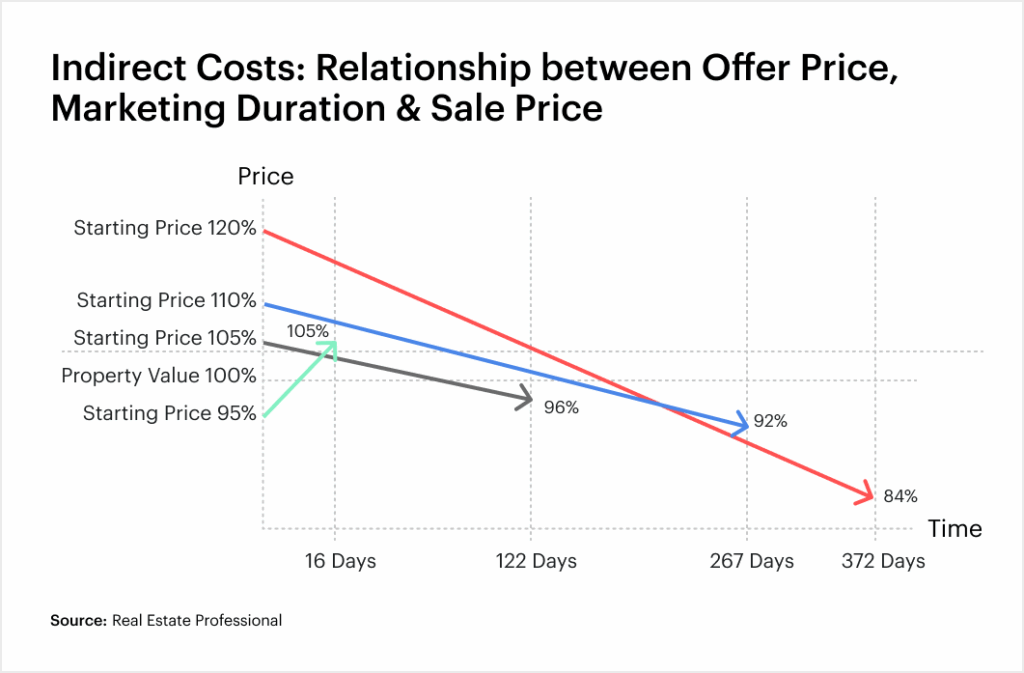
Furthermore, costs are not only incurred through fees or taxes. Strategic factors often also play a role in the background. An offer price that is too high, a lack of market knowledge or time pressure can prolong the sales process. In such cases, indirect costs arise that reduce the result. Costs are therefore not just figures, but an expression of the overall sales strategy.
Notary fees for real estate sales: manageable and easy to plan
Notary fees for real estate sales are one of the few cost items that are clearly regulated and easy to calculate. They arise from the public notarization of the purchase contract and the entry of the change of ownership in the land register. The exact amount depends on cantonal requirements and the agreed purchase price.
However, the decisive factor is that notary fees are not a factor of uncertainty. In relation to the total sales volume, they are within a manageable range. Moreover, in many cases they are split between the buyer and seller. This predictability contributes significantly to a structured and calm sales process.
Taxes as a decisive cost factor when selling real estate
Taxes on property sales have a much greater influence on the sales result. The focus here is on property gains tax, which is levied on the profit made. Its amount depends, among other things, on the holding period of the property as well as eligible investments. This point in particular shows why the costs of selling a property should be assessed at an early stage.
A sale at the wrong time can be significantly less favorable from a tax perspective. Conversely, you can often gain leeway through conscious planning. Taxes are therefore not a fixed deduction, but a key decision-making factor.
Hidden costs when selling real estate: the invisible factors
In addition to clearly quantifiable costs, there are also factors in real estate sales that cannot be calculated directly. Nevertheless, they have a noticeable effect on the result. These include an excessively long marketing period due to unrealistic price expectations or decisions made under time pressure.
In addition, there is often an emotional attachment to the property. This can lead to market reactions being misinterpreted or necessary adjustments being made too late. Such “invisible costs” do not appear in any statement, but influence the scope for negotiation and ultimately the price achieved.
Correctly classify real estate sales costs
Structured sales planning combines market value, costs and tax implications to create a coherent overall picture. A well-founded property valuation forms the basis for realistic expectations and helps to avoid wrong decisions. It provides orientation and makes it possible to base the sale on a sound basis for decision-making.
The type of sales support can also influence the result. Although professional support from real estate agents incurs costs, it often has an impact on other factors such as marketing time, price strategy or negotiation results. In many cases, indirect costs can be reduced or wrong decisions avoided. The decisive factor is therefore not so much the individual position, but the interplay of effort, structure and the achievable overall result.
Conclusion
The costs of selling a property are not a marginal issue. They influence the timing of the sale, the strategy and the actual result. Those who plan early, take tax effects into account and also classify the less visible factors make better decisions. This clarity creates confidence, both in the process and in your own decision.
FAQs:
What costs are incurred when selling real estate?
When selling a property, there are several types of costs that should be considered together. These include formal costs such as notary and land registry fees, tax costs such as property gains tax and indirect costs, for example due to a long marketing period or renegotiations. The decisive factor is not the individual item, but its effect on the overall result. If you classify the costs of selling a property at an early stage, you can develop realistic expectations and plan the sale strategically.
Why do taxes play such a big role in the cost of selling real estate?
In many cases, taxes are the largest cost item when selling real estate. Property gains tax depends heavily on the holding period and the profit made. A difference of just a few years can significantly change the tax burden. This is why taxes are not a fixed deduction, but a key decision-making factor. Early planning helps to realistically assess the tax implications and consciously choose the time of sale.
How high are the notary fees for real estate sales?
Notary fees are regulated by canton and are usually based on the purchase price. They are manageable, easy to plan and are often split between the buyer and seller.
Can the costs of selling a property be influenced?
Not all costs can be avoided, but many can be influenced. A realistic pricing strategy, the right time to sell and good preparation can significantly reduce indirect costs.
When should you consider the costs of selling a property?
Ideally before the actual decision to sell is made. Early clarity creates room for maneuver and prevents decisions being made under time pressure.